In federal court, nearly half of 2025’s digital accessibility cases named a defendant who had been sued before.
A demand letter arrives. The site allegedly fails WCAG, the plaintiff and the firm are names nobody recognizes, and there’s a number that makes it all go away. Paying it and getting back to work feels like the obvious move.
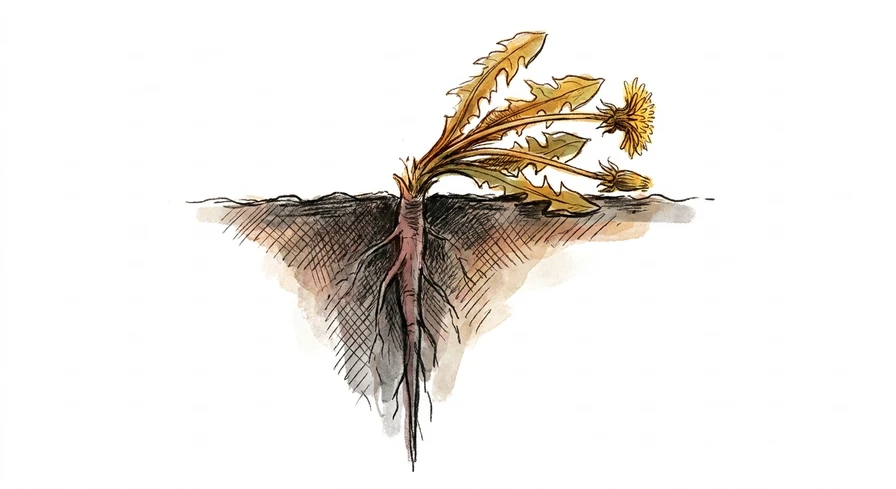
It’s also the move that tends to land a company right back in the same spot within a year — the bloom cut off a dandelion while the taproot stays in the ground. The government’s own court filings show why it grows back.
Nearly half were repeat defendants
UsableNet’s review of 2025 filings put it at 45–46% of federal cases: the defendant had already faced an ADA web accessibility claim. The complaints describe the loop in one line — “a settlement, limited remediation, a new plaintiff, and another filing — often within months.” Plaintiff firms track who has been sued and circle back to anyone who looks like they only patched the surface. To them, an earlier suit reads as an invitation.
A settlement invites the next one because of what it leaves behind. Under Title III, a private plaintiff can only win an order to fix the site, never money damages — DOJ says so plainly: “Title III of the ADA does not provide for money damages for private plaintiffs.” Settling ends one plaintiff’s claim and stops there. It certifies nothing about the site, and it changes no code. The barriers that drew the first complaint stay put, waiting for the next person who trips on them.
The government stepped into one of these cases
In February, the United States filed a Statement of Interest in Alcazar v. Fashion Nova, urging the court to reject a proposed class settlement. DOJ described the plaintiff’s lawyer: “in excess of 500 such suits, with the vast majority ending in a non-disclosed individual settlement.” After this case, the same named plaintiff “filed 15 more class action lawsuits over three months, each alleging four identical accessibility barriers for blind or visually-impaired people — word for word,” then five more the next year.
The settlement’s entire fix was one sentence: the site would reach “substantial conformance with WCAG 2.1.” No monitoring. No enforcement. And an audit right that was optional, paid for by the plaintiffs’ side — one that, DOJ noted, “appears to have expired on December 14, 2025.” Everyone in the class outside California got that sentence and nothing more.
The settlement’s own website failed the same test
Then there’s the website the settlement itself built. DOJ had an expert test the site blind class members had to use to claim their money, and it failed — on the same kinds of barriers as the lawsuit that started it.
The first question was “Are you legally blind?” The labels weren’t tied to the buttons, so a screen reader read “Yes” and “No” with nothing attached, and the user would “have to guess the question.” Where a sighted user saw one Submit button, a screen reader announced two, and only one worked. Get it wrong, and the page said nothing back — a claimant “could think that their form was accepted when it was not.” DOJ’s word for it: “ironically.”
A settlement built to pay blind people ran on a site blind people couldn’t use. That is what “handled it” looks like when no one touches the code.
What actually ends it
Pull the whole root: fix the site. Real remediation to WCAG 2.1 AA, on the pages where the barriers live — the forms, the checkout, the search, the booking flow. That is the one move that changes what the next tester finds. The shortcuts leave the code where it was: a settlement does, as Fashion Nova shows, and so does a one-line widget — the FTC fined accessiBe $1 million in April 2025 for selling one as compliance.
Want to see where a site actually stands? Run it through our free report — no login, no credit card, no sales call. You get the barriers we can detect automatically and a fixed price to fix them.
The fine print
Everything above is sourced. Here’s where each number comes from and how far it goes.
- UsableNet sells remediation and testing — and so do we. Treat the counts as directional; we use them because they’re the best available and they point the same way the government filings do.
- The 45–46% is UsableNet’s, federal court. Their report gives both figures, so we cite the range. Their scope is “digital accessibility” broadly — websites, apps, and online services, not websites alone.
- The FTC order is a consent order, not a court ruling. It binds accessiBe, not overlays as a category; no court has held that overlays fail as a matter of law.
- A scan is a floor, not a verdict — ours included. Automated tools catch machine-detectable problems, not whether alt text means anything or whether a keyboard user can escape a modal. DOJ’s own expert paired five automated tools (including the axe engine ours is built on) with JAWS, NVDA, and iOS VoiceOver, run by someone with thirty years’ experience. A clean scan means nothing machine-detectable turned up — not proof a site is accessible.
- We’re not lawyers, and none of this is legal advice. It’s what the filings say.
Sources
- U.S. Department of Justice, Statement of Interest, Alcazar v. Fashion Nova, Inc., No. 4:20-cv-01434-JST (N.D. Cal.), ECF 214, filed Feb. 2, 2026, and Declaration of Terri Youngblood Savage, ECF 214-1 — https://www.justice.gov/crt/media/1426326/dl
- Federal Trade Commission, “FTC Approves Final Order Requiring accessiBe to pay $1 Million,” Apr. 22, 2025 — https://www.ftc.gov/news-events/news/press-releases/2025/04/ftc-approves-final-order-requiring-accessibe-pay-1-million
- UsableNet, “ADA Web Lawsuit Trends for 2026: What 2025 Filings Reveal,” Jan. 8, 2026 — https://blog.usablenet.com/ada-web-lawsuit-trends-2026