Web accessibility, remediated
96% of websites fail accessibility standards. Is yours one of them?
Federal website accessibility lawsuits jumped 27% last year. We fix the code itself, at a fixed price. Start with a free scan.
Free, and it takes about a minute. No credit card, no sales call.

3,117
federal website lawsuits filed in 2025
+27%
year over year, reversing two years of decline
$1M
FTC order against the overlay vendor accessiBe
№ 01 — The problem
The lawsuits are real, and most businesses find out when a demand letter arrives.
If your business has a physical location, courts have repeatedly applied the ADA to its website. When someone with a disability can't use that site, they're shut out, and more of them are suing over it every year.
3,117 ADA website lawsuits were filed in federal court in 2025, up 27% from the year before and 36% of all ADA Title III cases filed in federal court that year. They've hit e-commerce, restaurants, hotels, financial services, and nonprofits. No industry is exempt.
Most owners don't find out until the demand letter shows up. By then you're hiring a lawyer, the plaintiff already has their documentation, and the fix you could have scheduled on your own terms is happening under court order instead.
№ 02 — The economics
Fixing your site costs less than fighting over it.

A lawsuit doesn't get you out of the repair. Making the site accessible is exactly what a court orders you to do, so getting sued just adds a legal bill, a plaintiff's deadline, and months of disruption on top of the work you were going to do anyway.
Do it now and you skip all of that. You pay for the work once, at a price you can see before you commit, with no defense fees or settlement stacked on top. It's the same repair either way. The only question is whether you pay for it on your schedule or a plaintiff's.
That price is the one number in this market you don't have to guess at. Put in your URL and the report comes back in about a minute with the number on it. No call required.
№ 03 — The overlay problem
Accessibility overlays don't protect you. They make you easier to sue.
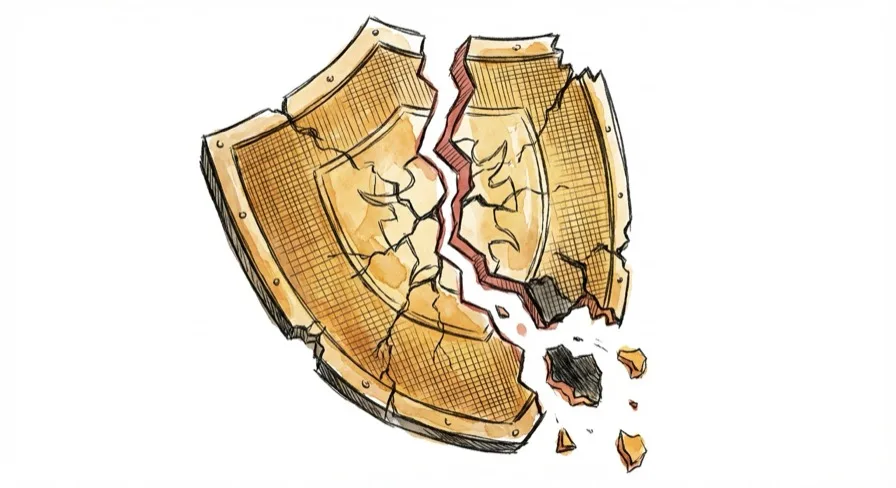
Overlays are toolbar plugins that promise compliance for a monthly fee. In 2025, 983 of the 3,948 website accessibility suits tracked across federal and state courts targeted sites that already had one installed. That's close to a quarter of them.
They don't help
An overlay doesn't change your code, so whatever a screen reader couldn't do before, it still can't.
Regulators have acted
The FTC fined AccessiBe $1 million, and barred it from claiming its automated product can make any website WCAG-compliant. The DOJ has warned against overlays too.
It's not your fault
If your developer or agency installed one, they probably didn't know better. Most didn't. The law has moved since then.
What does work: fixing the code itself. The structure, navigation, forms, and design underneath are what a screen reader has to work with, and an overlay never touches them. That's what Guava does.
№ 04 — How it works
Real remediation, in four steps.
We're not software, and we're not a consulting retainer. We fix your website's code so the site works for everyone, including the one in four American adults living with a disability (CDC, 2018 BRFSS). The target is WCAG 2.1 AA, the standard courts reference in ADA cases.

Scan
Enter your URL and get a report in about a minute, in plain language instead of developer jargon.

Price
An itemized remediation scope with the price attached, generated automatically. No sales rep sets the number, and no call is required.

Fix
We remediate the code: structure, navigation, forms, media, design. Every fix maps to a specific WCAG requirement.

Proof
You get a remediated site and a report documenting every fix. Share it with your lawyer, insurer, or anyone who asks.
№ 05 — The comparison
Three ways to handle website accessibility. One of them works.
| Overlay widgets | Large firms | Guava | |
|---|---|---|---|
| What you get | JavaScript toolbar on top of your existing site | Consulting engagement with a large scope | Code-level remediation, scoped to your site |
| Fixes your code? | No | Eventually | Yes |
| Typical timeline | Instant (but ineffective) | Months | Weeks |
| Pricing | Monthly fee that never ends, and your code is unchanged | Enterprise engagement | Fixed price, scoped and itemized up front |
| Requires your own developer? | No | Usually | No |
What you get
- Overlay widgets
- JavaScript toolbar on top of your existing site
- Large firms
- Consulting engagement with a large scope
- Guava
- Code-level remediation, scoped to your site
Fixes your code?
- Overlay widgets
- No
- Large firms
- Eventually
- Guava
- Yes
Typical timeline
- Overlay widgets
- Instant (but ineffective)
- Large firms
- Months
- Guava
- Weeks
Pricing
- Overlay widgets
- Monthly fee that never ends, and your code is unchanged
- Large firms
- Enterprise engagement
- Guava
- Fixed price, scoped and itemized up front
Requires your own developer?
- Overlay widgets
- No
- Large firms
- Usually
- Guava
- No
Guava sits between the shortcut that doesn't work and the enterprise engagement most businesses can't justify. You get real remediation at a fixed price, usually in a few weeks.
№ 06 — Questions
Questions we hear most
Is my website legally required to be ADA compliant?
What is WCAG 2.1 AA?
I already have an overlay installed. Am I covered?
How is Guava different from an overlay?
How long does remediation take?
Do I need to involve my developer?
What do I get when it's done?
What does it cost?
What's the new DOJ rule I keep hearing about?
A website that works for everyone also protects you. Start with a free report.
In about a minute, you'll see exactly where your site stands: what needs fixing, and what it costs.
No credit card, no commitment, and no sales call unless you ask for one.